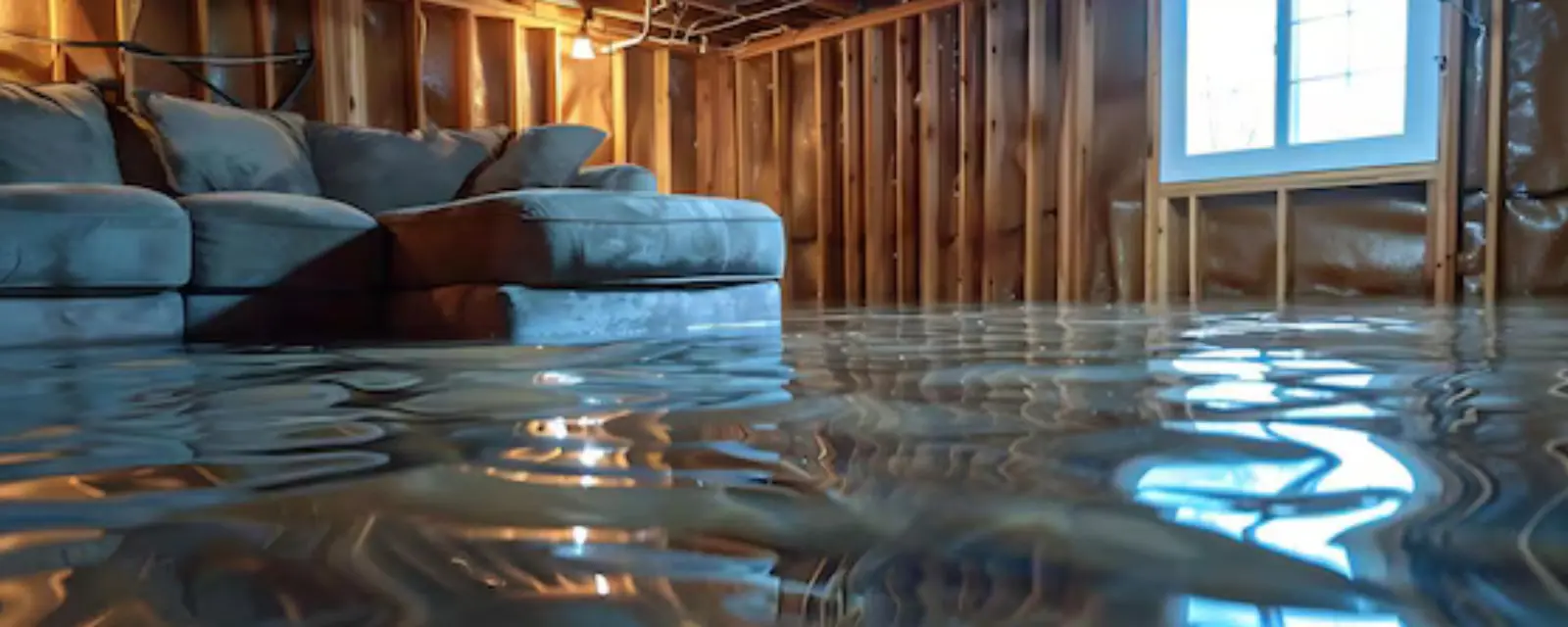
Why does my house still smell damp after the water is gone?
A musty smell, a wall that feels cool to the touch or a floor that never quite dries usually means water is still in the structure. You can mop a puddle in minutes, but moisture inside drywall, insulation and subfloor stays for days or weeks without help.
The trade term for fixing that is water mitigation. It means stopping the damage from growing by removing the water you can see and drying the water you cannot, which is exactly where mold and rot begin.
What water mitigation means in the first 72 hours
Water mitigation in Holliston, MA is the emergency stage of a water loss. It includes stopping the source, extracting standing water, finding hidden moisture and setting drying equipment before the damage spreads further.
Time matters because water moves. It travels along framing, down wall cavities and under flooring, so a leak in one corner of a room can reach three others by morning. The Massachusetts Department of Public Health guide tells homeowners to dry wet areas within 24 hours if possible and notes that the state Housing Code calls for drying within 48 hours.
If your problem is still active, call the 24/7 line at (508) 446-9244. While you wait, close the water source, lift valuables and keep power off wet areas if it is not safe to reach the panel.
How the drying process works
Drying is a measured process. We start by mapping moisture with a meter and a thermal imaging camera, then set equipment based on what the readings show, not on a standard number of fans.
- Map the wet area with moisture meters and a thermal camera
- Extract standing water so drying equipment is not wasting effort on puddles
- Open wall bases, lift trim or drill small access holes where moisture is trapped
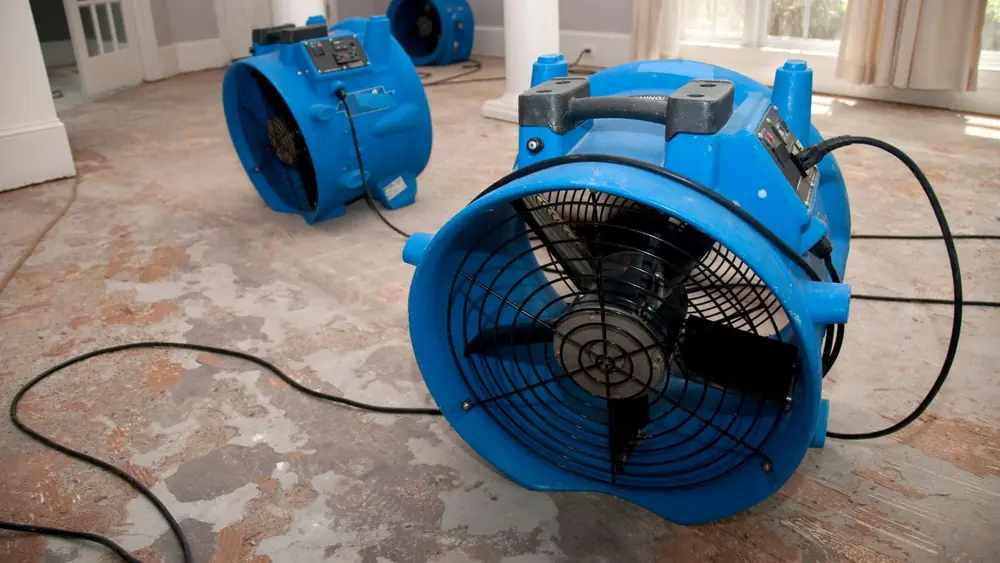
- Place air movers to push dry air across wet surfaces
- Run LGR or desiccant dehumidifiers to pull moisture out of the air
- Take readings each visit and adjust equipment until the structure reaches its dry standard
The ANSI/IICRC S500 standard is the published industry reference for water damage restoration. Ask any company you consider whether its crews follow it, and ask what drying goals they set for your home.
Structural drying
Structural drying focuses on the parts of the house that hold water: studs, plates, subfloor, plaster and concrete. These materials absorb slowly and release slowly, so drying them can take several days even after the air feels normal.
Equipment is chosen by the class of loss. A Class 1 loss touches only part of a room and low-permeance materials. Class 2 involves a whole room and carpet, with water wicking up walls. Class 3 means water came from above and has saturated ceilings, walls and insulation. Class 4 covers deep saturation in dense materials like hardwood or concrete, which needs specialty drying.
| Class | What is wet | Typical drying approach |
|---|---|---|
| Class 1 | Small area, low-absorbency materials | A few air movers and a dehumidifier |
| Class 2 | Whole room, carpet, walls wicking water | More air movers, wall cavity drying, extraction |
| Class 3 | Ceilings, walls and insulation saturated from above | Open cavities, remove insulation, heavy airflow |
| Class 4 | Deeply saturated hardwood, plaster or concrete | Specialty desiccant drying, longer timeline |
Why equipment sits in your house for several days
People ask why the fans run for so long. The answer is that surface dryness is not the target. Moisture meters read wood framing, drywall and subfloor, and the goal is to bring them back near their normal range before anything is closed up.
We do not offer equipment rental. Drying is monitored and adjusted by the crew on each visit, so the equipment comes with the readings that justify it.
Holliston and the risk of hidden moisture
Local weather adds to the problem. Nearby NOAA stations record about 43 to 48 inches of precipitation in a normal year, and snowmelt in late winter pushes more water against foundations. The Holliston Hazard Mitigation Plan itself notes that heavy snow increases flooding risk when it melts.
Houses near Lake Winthrop, the Bogastow Brook corridor and the low ground along Washington Street have more reason than most to check basements after a heavy storm. A wet basement that gets only a surface clean will stay damp in the walls.
What affects the cost of mitigation
We explain scope and price before work starts. Drying jobs are priced on a handful of factors:
- The water category and how long materials were wet before drying began
- Square footage and the number of rooms affected
- The materials involved, such as plaster, hardwood or concrete
- Days of drying and the equipment needed to reach target readings
- Whether demolition or rebuild is also part of the job
Insurance and records
Mitigation records help your claim. The moisture map, daily readings and photos show what was wet and what was done. Sudden and accidental water damage is often covered, while slow leaks often are not, so check your policy or ask your insurer.
Homeowners in Hopkinton and Medway get the same documentation. When drying is finished, damaged materials move into cleanup and then repair.
Frequently asked questions
Do you handle water mitigation emergencies at night or on weekends in Holliston?
Yes. Mitigation calls are taken at (508) 446-9244 around the clock. If a crew is free it goes out the same day, and you hear the scope and price before any work begins.
How long does drying take?
Drying is finished when the readings say it is, not on a fixed day count. Several days is common for a typical wet room. Heavy saturation or dense materials can take longer.
My carpet feels dry. Do I still need drying?
Possibly. The pad and subfloor stay wet long after the surface feels dry. A moisture meter tells you what is happening underneath.
Why do you need so many fans and dehumidifiers?
Air movers push dry air across wet materials and dehumidifiers pull moisture out of the air. Without both, the water just moves around the room.
Can I rent the drying equipment and run it myself?
We do not rent equipment. Without readings and adjustments, rented fans often leave moisture in framing and subfloor.
Will mitigation stop mold?
Fast, thorough drying reduces the moisture mold needs. It cannot promise a mold-free result, but it removes the main condition mold depends on.
Is the damage still spreading?
Call the 24/7 line. Early drying is the cheapest repair.
☎ Call (508) 446-9244