
What looks like mold and what causes it
Mold remediation in Holliston, MA starts with a question: where did the moisture come from? Mold grows on damp materials, so a spot on a closet wall or bathroom ceiling usually traces back to a leak, condensation or a humidity problem.
Common starting points include a leaking toilet or sink supply, a roof or siding leak, an air conditioner condensate line that backed up, a window with a failed seal and a basement that stays damp. Fix the water source first. Removing mold without fixing the moisture only buys a few months.
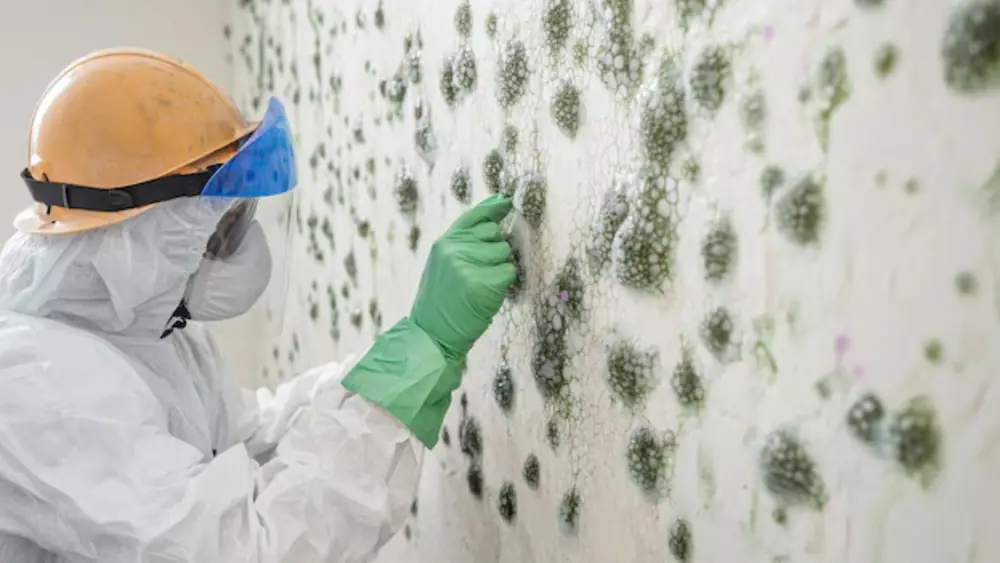
Signs worth checking
- Fuzzy or speckled spots on walls, ceilings, grout or the underside of carpet
- A musty smell that comes back after cleaning
- Paint that bubbles or peels on an exterior wall or bathroom ceiling
- A closet or corner behind furniture that stays cold and damp
- Visible condensation on windows or ductwork in the same area
- A recent leak that was never fully dried
You cannot tell the type of mold from a photo, and color is not a reliable guide. Black or dark spots are not automatically dangerous, and white or green spots are not automatically harmless. If you are worried about health effects, speak with a physician.
Mold testing and inspection
Inspection answers three questions: how much is there, where is the moisture and what has to be removed. A visual look with a moisture meter and thermal camera finds most problems. Sampling is sometimes added when a property sale, a lender or an insurer requires documentation.
Independent clearance testing is a separate step. After remediation, a third party with no stake in the work can take samples and confirm the area meets the cleanup goal. For a home sale or loan, ask the buyer's lender or agent exactly what documentation is required before you hire anyone.
The Massachusetts Department of Public Health notes there are no state or federal standards for a safe amount of mold, so the practical goal is removing growth and the moisture behind it.
Mold after water damage
Mold often follows a leak that was only dried on the surface. Wet drywall, insulation and framing give mold what it needs after a day or two. The state guide advises drying wet areas within 24 hours if possible, and the Housing Code calls for drying within 48 hours.
That is why the fastest protection is quick drying, which is the job of water mitigation. If the damp area has been ignored for weeks, remediation and repair are both likely.
How remediation works
The ANSI/IICRC S520 standard is the published industry reference for mold remediation. It describes containment, air filtration, removal of contaminated porous materials and cleaning of surfaces that stay. Ask any company whether its crews work to it.
- Locate and stop the moisture source
- Set containment with plastic barriers and run negative air machines with HEPA filtration
- Remove porous materials with growth, such as drywall, insulation and carpet
- Clean wood framing and hard surfaces with HEPA vacuums and damp wiping
- Dry the area and confirm moisture readings are normal
- Rebuild finishes once the area is dry and clean
Mold removal and black mold cleanup
The term black mold is common but not precise. Many species look dark. What matters is how much growth there is, what material it is on and whether the moisture source is fixed.
Small areas of surface growth on hard, nonporous material can often be washed off with detergent and water, which is the approach the state guide describes. Larger areas, growth inside walls and anything on porous material call for professionals.
Massachusetts does not require a license for mold remediation work, according to the Department of Public Health guide. That makes it more important to ask for a written scope, a Statement of Qualifications and references before signing anything.
Bathrooms, closets and basements in Holliston
Older homes in town often have tight bathrooms with weak ventilation. A ceiling fan that does not vent outside, or a shower that has no fan at all, keeps the ceiling damp for hours each day. Mold on a bathroom ceiling is usually a ventilation problem first.
Closets on exterior walls and basement corners stay cold and trap humid air. Houses near Lake Winthrop or the Bogastow Brook corridor can also have high groundwater in wet seasons, which keeps basements damp.
We do not waterproof basements. If the foundation lets water in, a drainage specialist should address that after remediation.
What affects mold remediation cost
We explain inspection, scope and price before work starts. The price usually depends on:
- Square footage with growth and whether it is surface or inside walls
- Materials involved, such as drywall, plaster or framing
- Containment and air filtration needs
- Whether testing and clearance sampling are required
- Drying time and the rebuild after removal
Insurance
Mold coverage varies widely. Some policies cover mold that results from a sudden covered loss, and others exclude it or cap it. Check your policy and ask your insurer before work starts.
We serve Ashland, Hopkinton and the rest of the area from one line. For leaks that caused the mold, see water damage repair after the area is clean.
Frequently asked questions
Do I need to test for mold before remediation?
Not always. If growth is visible and the moisture source is clear, remediation can proceed. Testing is useful for sale or loan documentation or when the source is unclear.
Can I clean mold myself?
Small surface patches on hard material can often be cleaned with detergent and water. Larger areas, growth inside walls or on porous materials should be handled by professionals.
Does Massachusetts license mold remediation?
The state Department of Public Health guide says no license is required for mold remediation in Massachusetts. Ask for a Statement of Qualifications and references.
Will mold come back after remediation?
Mold needs moisture. Fixing the source and keeping humidity down is what keeps it away. No company can promise it never returns.
Can mold clearance testing help with a home sale?
It can provide documentation, but ask your lender or agent what they accept. We cannot promise how a lender will respond.
Do you handle mold emergencies at night or on weekends in Holliston?
The dispatch line is open 24/7. Mold itself is rarely an emergency, but the active leak behind it often is, so call if water is still moving.