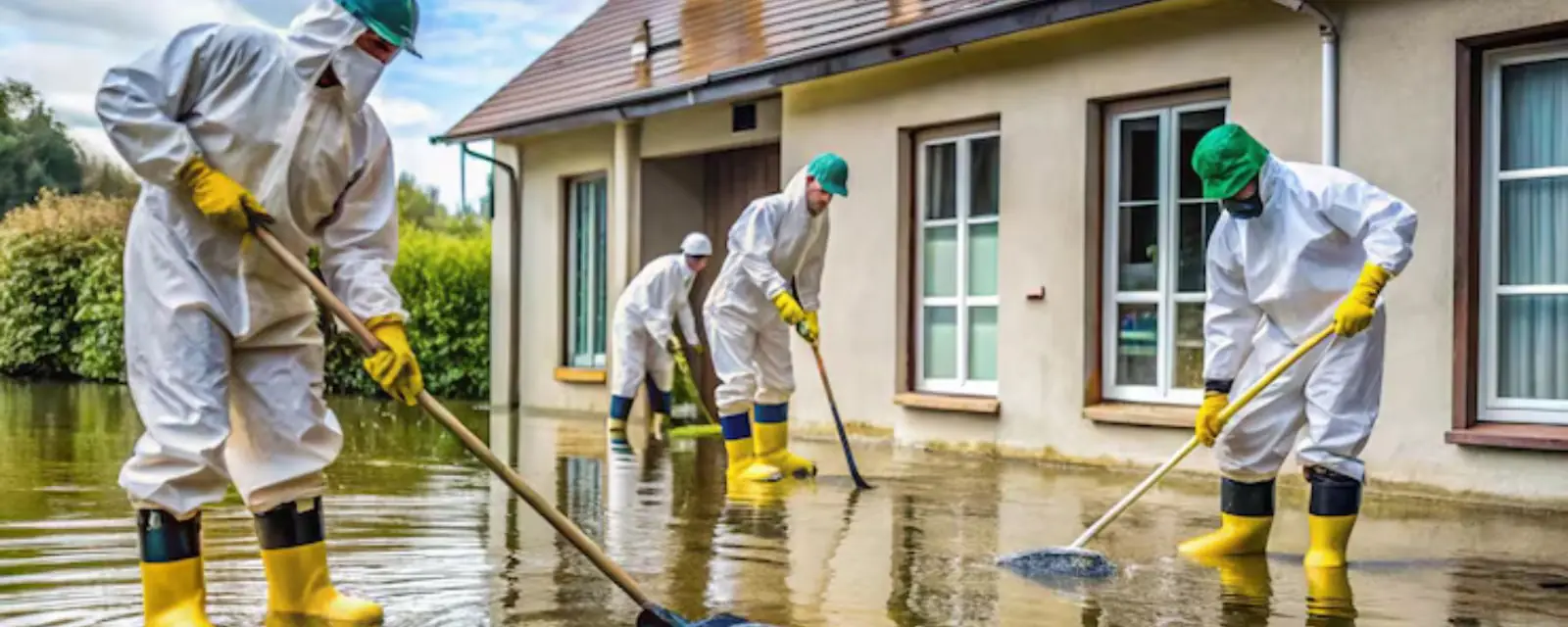
When flooding is an emergency
Floodwater from a stream, storm runoff or a backed-up drain is an emergency from the first inch. Flood damage restoration in Holliston, MA starts with safety, because water that has crossed the ground or come through a floor drain is treated as contaminated.
The dispatch line is answered 24 hours a day at (508) 446-9244. While you wait, stay out of the water, and do not step into a flooded basement if the electrical panel, outlets or appliances are anywhere near it.
Before you do anything else
If water has reached outlets, the panel, or a furnace, do not touch them. Cut power only if you can reach the panel while standing on dry ground, and otherwise call your utility or 911 first. If you smell gas, leave the house and call from outside.
Lift valuables, keep children and pets out of the water and wait for guidance before pumping. Pumping too fast can let saturated ground push against basement walls.
Why Holliston basements flood
The Town of Holliston's 2024 Hazard Mitigation Plan maps flood zones along Beaver Brook and Hopping Brook in the western part of town, at Lake Winthrop, and along Chicken Brook and Bogastow Brook. All together the mapped flood areas cover 217.4 acres, about 1.78 percent of the town.
That sounds small, but flooding does not follow the map. The same plan records significant flooding in a residential area when the Houghton's Pond dam backed up in the October 2005 storm, spillway backups at Weston Pond that reach a pumping station, and Washington Street flooding near number 1929 in large storms.
If your street sits near any of these waterways, look up your address on the FEMA Flood Map Service Center. It tells you the mapped zone, which matters for both insurance and repairs.
Winter adds its own risk. The plan notes that heavy snow raises flood risk when it melts, and the Massachusetts coastal zone program describes nor'easter season as running from October through April. Nearby NOAA stations record roughly 43 to 48 inches of precipitation in a normal year, plus snow.
What we do after a flood
Floodwater work follows a fixed order. Safety first, then water removal, then removal of materials that cannot be cleaned, then drying and sanitizing.
- Assess the water category and any electrical or structural risk before entering
- Pump or extract standing water in stages, using submersible pumps and truck-mounted or portable extraction units
- Remove porous materials that contacted floodwater, such as carpet pad, insulation and wet drywall
- Clean and apply an antimicrobial to framing, concrete and surfaces that stay
- Set air movers and dehumidifiers and log moisture readings until the structure reaches target levels
- Document each step with photos and readings for your records and your insurer
The Massachusetts Department of Public Health's homeowner guide advises treating floodwater as contaminated, removing porous finishes like board and trim that soaked in it, and drying wet areas quickly, with the Housing Code calling for drying within 48 hours after leaks and floods.
Basement flooding cleanup
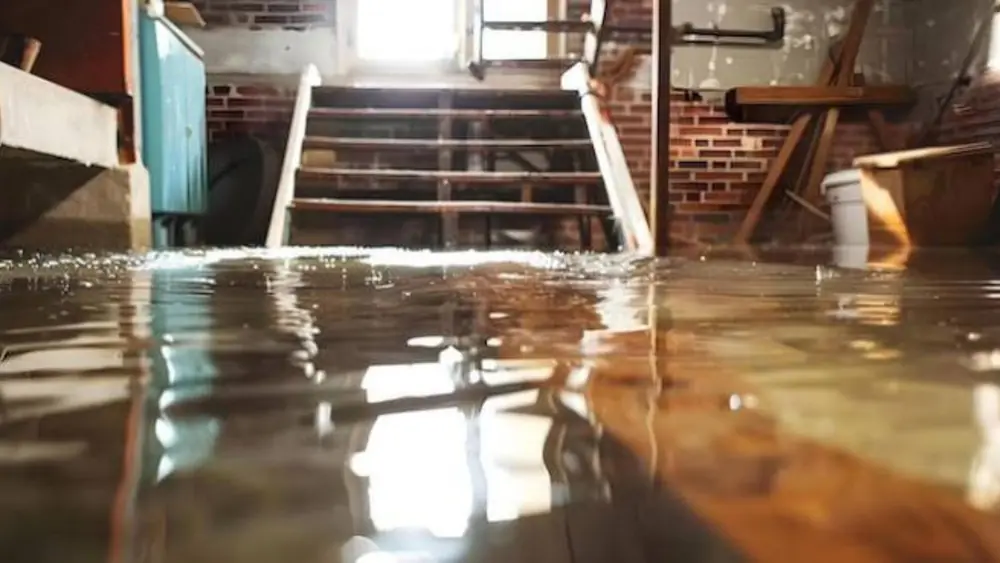
Basements collect water because they are the lowest point and often have a sump pit or floor drain that can fail. Common causes include a sump pump that lost power during a storm, a clogged window well, groundwater pressing through the slab and a municipal or private drain that backed up.
A flooded finished basement is a bigger job than an unfinished one. Carpet, pad, drywall, baseboards and insulation all have to be assessed, and storage boxes of paper and fabric go quickly.
Restoration is not waterproofing. We dry and repair what the water damaged, but we do not fix a leaking foundation or install drainage. If the basement floods every spring, ask a waterproofing or drainage specialist to look at the cause after we finish.
Sewage backup cleanup
Sewage backup is a Category 3 water loss, the most contaminated class in the ANSI/IICRC S500 water damage standard. Anything it touches that is porous has to be removed, and surfaces that stay need cleaning and sanitizing.
Keep everyone out of the area, do not run washers or flush toilets while the line is backed up, and do not try to vacuum it with a household wet vac. Crews wear protective gear and use sealed extraction equipment for a reason.
If your property is on a septic system, the Holliston Board of Health is the local authority for septic questions, and it is worth contacting them if the tank or leach field is involved.
Insurance and flood coverage
This is the part that surprises people. Flood is excluded from standard homeowners policies, the state insurance division says, and only an add-on such as sump pump or water backup coverage may respond. Flood insurance is a separate policy, often through the National Flood Insurance Program, and it usually has a 30-day waiting period.
Holliston participates in the NFIP. The town's hazard plan reports 54 policies in force at the time of the plan, so coverage does exist locally, but most homes do not have it. Read your policy and ask your insurer what applies to your loss.
Report any claim right away, photograph the damage before cleanup and keep records. We provide written scope and moisture logs, and we do not promise how a claim will be decided.
What affects the cost of flood damage restoration
Flood jobs vary more than almost any other water loss. We explain scope and price before work starts, and these are the main drivers:
- Water category, because Category 3 loss means more material removal and sanitizing
- Depth of water and how much floor area was covered
- Finished versus unfinished space and the materials involved
- Drying time and the number of air movers and dehumidifiers needed
- Rebuild scope after drying, which is priced as a separate stage
Nearby towns we serve
Brooks do not stop at town lines. The Charles River and Bogastow Brook run along the edges of this region, and we respond to flooding in Medway and Sherborn from the same dispatch line as Holliston.
After the water is out, the structure still has to be dried. That stage is covered under water mitigation, and the rebuild falls under water damage repair.
Frequently asked questions
Do you handle flood damage restoration emergencies at night or on weekends in Holliston?
Yes. Flood calls get answered at (508) 446-9244 day or night, weekends and holidays included. A crew is dispatched the same day if one is free, after we have explained what the job involves and what drives its price.
Is it safe to enter my flooded basement?
Not until you know the power is off and the water is not touching outlets, the panel or appliances. Floodwater can also carry sewage, so treat it as contaminated. If you are unsure, wait for guidance.
Does homeowners insurance cover flooding?
Standard homeowners policies in Massachusetts do not cover flood damage according to the state Division of Insurance. A sump pump or water backup endorsement may help in some cases. Check your policy and ask your insurer.
How long until the basement is dry?
It depends on the water category, the depth and the materials. Drying is measured with moisture meters rather than a calendar, and the state guide calls for drying wet areas within 24 to 48 hours where possible.
Can you fix my basement so it never floods again?
No. We restore what the water damaged. Preventing repeat flooding takes drainage, grading or sump work from a waterproofing contractor.
Do you serve Medway and Sherborn for flooding?
Yes, both are in our service area, along with Milford, Ashland and Hopkinton.
Flood water in the house?
Stay out of the water and call the 24/7 emergency line.
☎ Call (508) 446-9244