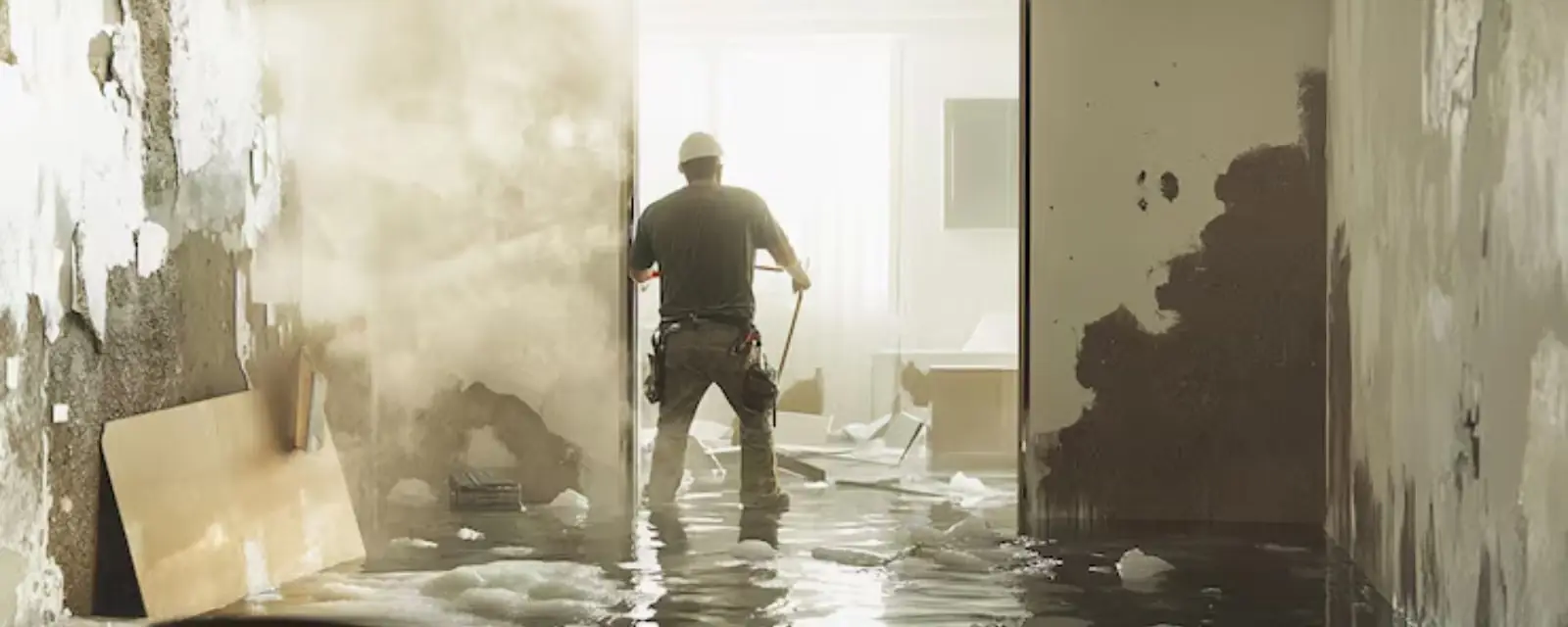
The short answer: dry the cavity, then rebuild the surface
Water damage wall repair in Holliston, MA always runs in the same order. Find and stop the source, measure how far the moisture traveled, open the wall where readings stay high, dry the framing, then patch and finish. Paint is the last step, never the first.
The reason is simple. A wall is a hollow box with a face on each side. Water that enters the box does not stay where the stain shows, and a surface that looks dry can sit on framing that still reads wet.
If water is still running or dripping, shut off the supply and call about emergency water removal before anyone prices a patch.
Why the stain is rarely the problem
Water follows gravity inside a wall cavity. A pinhole leak in a supply line at the second floor can run down the back of the drywall, soak the bottom plate and show up as a stain at the baseboard on the first floor.
It also wicks. Drywall paper pulls moisture upward like a paper towel dipped in a glass, so the wet zone is usually taller than the visible mark. We run a moisture meter across the wall in a grid and use a thermal imaging camera to spot cool, damp areas behind the surface.
Insulation matters as much as the wall face. Wet fiberglass or cellulose packs down, holds water against the studs and keeps the cavity damp long after the surface feels fine. It almost always comes out.
Plaster, drywall or paneling: what you have changes the repair
The wall material decides how much comes out and how the patch is built. Ask the crew to identify what is on your wall before they quote.
| Wall type | How it reacts to water | Usual repair approach |
|---|---|---|
| Gypsum drywall (sheetrock) | Paper face and core soften quickly. Sags, crumbles at edges, grows mold on the paper if left wet. | Cut out wet sections at stud lines, dry the cavity, hang new board, tape, finish and prime. |
| Plaster over wood lath | Slower to soften but can loosen from the lath. Stains, bubbles and sections can pull away. | Dry in place when firmly attached. Remove loose or crumbling plaster, then re-plaster or patch with a compatible material. |
| Plaster over metal or board lath | Holds up better but the base layer can stain and delaminate. | Test for bond, remove failed areas, patch in layers. |
| Wood paneling or beadboard | Boards swell, cup and open at joints. Finish can blister. | Pull affected boards, dry the backing, replace or refinish. Salvage is often possible. |
Drywall is the easiest to replace and the hardest to save once it is soaked. Plaster is the reverse: it can often be dried in place, which saves the original wall.
Exterior walls and interior walls fail in different ways
Interior walls usually get wet from plumbing: a supply line, a drain, a shower valve, a radiator pipe. The water is clean at first, the cavity is short and the repair is local.
Exterior walls take water from outside as well. Failed window flashing, a roof edge that sheds water down the siding, or a cracked foundation joint can feed a wall for months before anyone sees a mark. Those walls carry sheathing, house wrap and more insulation, so the opening is larger and the cause has to be fixed by a roofer, a siding contractor or a mason before the wall is closed.
Restoration crews dry and rebuild. We do not replace flashing or repair plumbing, and a good scope says so plainly. If the leak source is not fixed, the new wall will get wet again.
The repair sequence, step by step
- Stop the water at the source and shut off power to any wet outlets or switches in the wall.
- Photograph the damage and take moisture readings before anything is removed.
- Remove wet insulation and any drywall or plaster that is soft, crumbling or still reading wet after a short drying attempt.
- Open the cavity enough for air to move through it. Set air movers and an LGR dehumidifier, and re-check readings daily.
- Treat framing that shows surface growth by cleaning it, and confirm the studs are at normal moisture content before closing.
- Install new insulation, hang or patch the wall face, tape and finish, then prime and paint the full wall plane so the repair does not flash through.
Industry practice for drying is written down in ANSI/IICRC S500, the published standard for water damage restoration. You can ask any company how its drying plan follows it.
When a wall can stay and when it has to go
Dry sound material is cheaper to keep than to replace, so crews try to save it where the numbers allow. The deciding factors are how long it was wet, what kind of water it was and what the surface feels like.
- Clean water from a supply line, found within a day or two: drywall is often dried in place if it is firm and flat
- Drywall that sags, flakes or has softened corners: cut it out
- Wet insulation of any kind: remove it
- Visible mold growth across large areas: stop and treat it as a mold job, not a wall patch
- Water from a sewer backup or a flood: discard porous wallboard and insulation, as the state Department of Public Health's homeowner guide advises
- Plaster that rings solid when tapped and still sits tight to the lath: usually worth drying and keeping
Our water mitigation crews handle the drying stage and tell you in writing what stays and what goes.
Holliston's older cottages and the walls inside them
What to do in the first hours while you wait for a crew
Turn off the water at the main if you cannot find the leak. Cut power at the breaker for any room where water is touching outlets. Move furniture and rugs away from the wall.
The target in state health guidance is a complete dry-out within a day, and the Housing Code stretches that to 48 hours for leaks and floods. Open doors and run a household fan across the wall, but do not seal a wet wall with fresh paint or vinyl wallpaper.
Photograph everything before you clean up, with a wide shot and a close shot of each stain. If the cause was a sudden pipe failure, your insurer will want those photos. Gradual leaks are often excluded from coverage, so read your policy.
Choosing who does the work
For a small stain on one wall, a general contractor may handle both drying and patching. For anything with wet insulation, multiple rooms or an exterior wall, ask for a restoration crew with drying equipment and moisture logs.
Our water damage repair scopes list the cut line, the drying equipment, the materials and the finish coats before work starts. Neighbors in Milford and Hopkinton often face the same older-house issues, and the same questions apply there.
Frequently asked questions
How do I know if the wall behind the stain is still wet?
A stain only tells you water was there at some point. A pin-type or pinless moisture meter reads the actual moisture in drywall, plaster and wood framing, and a thermal imaging camera shows cool damp zones behind the surface. Tapping a finger on drywall that sounds dull or feels soft is a hint, but readings are the proof.
Can I paint over a water stain on a wall?
Only after the wall is confirmed dry and the source is fixed. Stain-blocking primer hides the mark, but it will not stop moisture or mold from continuing underneath. Painting too early is the most common reason a stain returns.
Does plaster have to be torn out after water damage?
Not always. Plaster that is still firmly bonded to its lath can often be dried in place and patched. Sections that crumble, sound hollow or have lifted away from the lath need to be removed and rebuilt.
How long does a wall take to dry?
It depends on the material, how wet it got and how well air can move through the cavity. Drying is measured with readings, not a calendar. The crew re-checks moisture daily and stops equipment only when framing and finish materials reach normal levels.
Will insurance pay for wall repair after a leak?
Sudden and accidental water damage, such as a burst supply line, is often covered. Slow leaks and neglect often are not. Ask your insurer, report the loss quickly and photograph the damage before cleanup.
Are there local rules I should check before opening a plaster wall in Holliston?
For cosmetic patching, usually not. If you find rot, or the work becomes structural, plumbing or wiring repair, the Holliston Building Department handles those permits and inspections. Call them before work starts, and ask about Health Agent review if the changes go beyond repair.
Dealing with this right now?
Call the 24/7 line. Scope and price are explained before work starts.
☎ Call (508) 446-9244