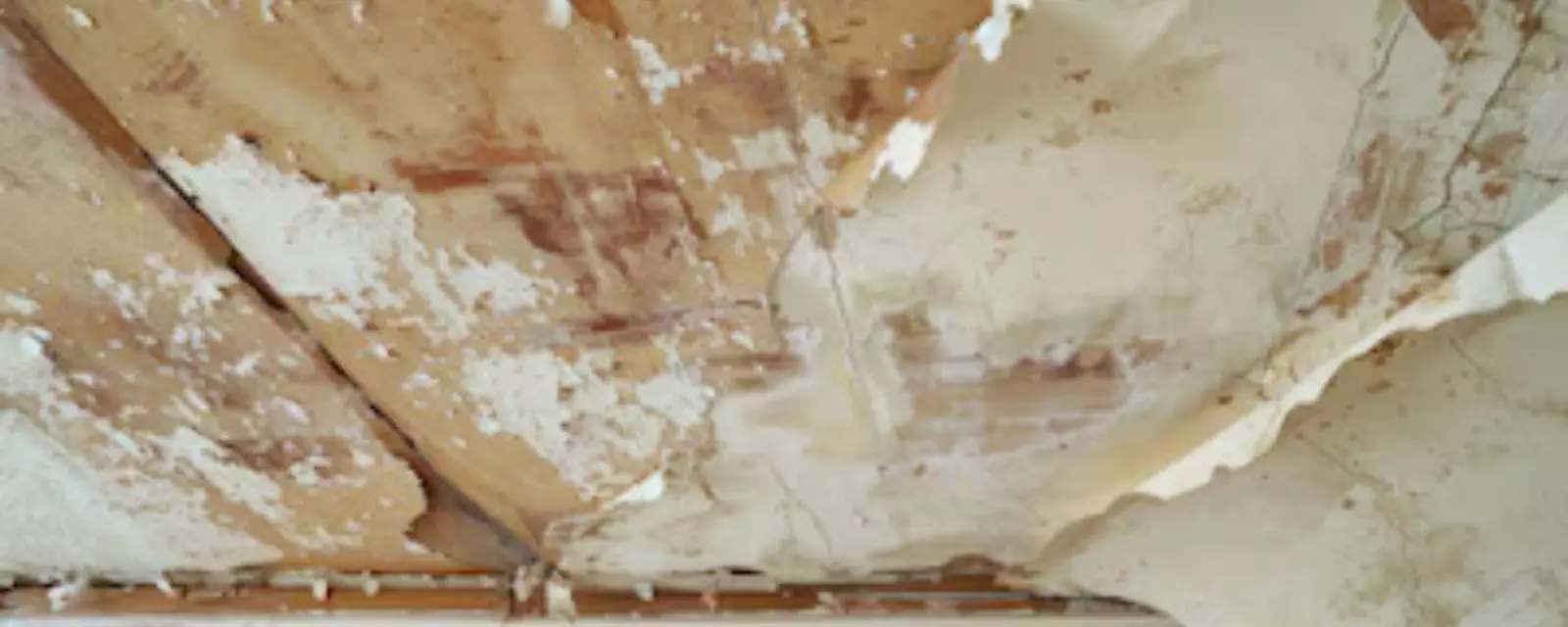
Sheetrock, drywall, wallboard: same product, same problem
Sheetrock water damage repair in Holliston, MA starts with a simple fact: sheetrock is a brand name that people use for drywall, also called gypsum board or wallboard. It is a gypsum core wrapped in paper, and the paper is what water attacks first.
Once the paper stays wet, it softens, stains and feeds mold. Whether the board can be saved depends on how long it was wet, how wet it got and what kind of water it was.
If the room is still wet or water is still coming through, start with emergency water removal. No cutting plan makes sense until the water stops.
Can wet sheetrock be saved? A decision table
Sometimes a small, quickly dried wet spot from clean water can be saved. More often the board has to come out, because gypsum crumbles and paper delaminates long before it looks ruined. The table gives a starting point, not a verdict.
| Condition | Water type | Usual decision |
|---|---|---|
| Damp surface, no staining, dried within a day or two | Clean supply water | May dry in place with air movers, confirm with a meter |
| Soft, bulging or sagging board | Any water | Cut out, the gypsum has lost strength |
| Brown stain ring, paper peeling | Clean water, several days old | Cut out and inspect the cavity behind it |
| Board wet from floodwater or sewage | Contaminated | Discard, per the state guide |
| Visible mold growth on the surface | Any water | Stop and see the mold section, do not scrub dry board |
After floodwater, state guidance is to remove porous finishes such as board, trim and batting. That includes boards that look dry on the face but sat in contaminated water.
Where to cut: finding the line
A moisture meter shows where the wet stops. Cut at least a few inches beyond the last high reading, then check the next section with the meter. If readings are still wet at the edge of your hole, keep going until the edge reads dry.
Cut lines look best when they land on the center of a stud, so the new patch can be screwed to something solid. For ceilings, the line follows a joist. Straight cuts also make taping simpler than ragged holes.
- Turn off power to the circuit and check for wires or pipes inside the wall before cutting
- Score the paper with a utility knife along a straightedge
- Cut to the stud center and pull the board away, wearing a dust mask and gloves
- Photograph the exposed cavity and check the insulation and framing with a meter
- Remove wet insulation and bag it before drying the framing
Drying the cavity before anything goes back
Closing a wall that still reads wet is the most common mistake. Moisture trapped behind new board shows up as stains, odor and softness within a season. Air movers push dry air across the open studs, and LGR dehumidifiers pull moisture out of the room.
Framing lumber usually needs readings close to normal for your house before new board goes on. The crew checks daily and logs the numbers. If you want to understand what those readings mean, structural drying and monitoring explains the process.
Insulation that took on water is removed, not dried in place. Fiberglass and cellulose lose their value once wet and hold moisture against the framing.
Hanging, taping and finishing in the right order
New sheetrock goes up after the framing reads dry and any needed cleaning is done. Replace insulation first, then hang the board with fasteners driven just below the surface. Use moisture-resistant board in damp areas such as bathrooms and basements if your plans call for it.
Taping and finishing happen in coats, with drying time between each. Joint compound takes time to cure, and rushing the finish leaves cracks and ridges that show through paint. Primer goes on before the final paint so patches do not flash.
- Hang board horizontally or in the pattern that keeps joints on studs
- Tape seams with paper or mesh tape and apply the first coat
- Sand lightly between coats, wearing a dust mask
- Prime the whole repair, then paint a full wall for an even finish
- Match texture last, if the wall has one
Old plaster and lath in Braggville, Metcalf and beyond
Mistakes that bring the stain back
Painting over a stain without finding the source is the most frequent error. Stain-blocking primer will hide a ring, but if the cavity is wet the ring returns. Another is patching a small square where a wider section was wet, which leaves damp board next to new board.
Skipping insulation replacement is the third. A bare stud bay without insulation will leave cold and condensation problems that look like a second leak.
When to hand the job to a restoration crew
A hole the size of a dinner plate from a clean-water drip is a reasonable homeowner project. Larger areas, ceilings, floodwater, visible mold or damage in more than one room are reasons to call a crew. The same applies if you cannot find the source of the leak.
Our water damage repair team handles cutting, drying and rebuilding, and explains scope and price before work starts. The same steps apply for a house in Milford or Hopkinton, where a stain can also turn out wider than the surface shows.
Restoration repairs the damage. It does not fix the leak, so call a plumber or roofer for the source.
Frequently asked questions
Is sheetrock the same as drywall?
Yes. Sheetrock is a brand name that has become a common word for drywall, which is also called gypsum board or wallboard. The repair steps are the same.
How do I know if wet sheetrock needs to be replaced?
Soft, bulging, crumbling or stained board usually has to come out. A moisture meter shows how far the water traveled, and board that read high for more than a day or two is rarely worth saving.
How big should the cut be?
Cut beyond the last high reading until the edge reads dry, ideally to a stud center. The patch should be screwed to solid framing rather than floating in the middle of a bay.
Can I just paint over a water stain?
Only after the source is fixed and the board reads dry. Painting over a damp stain hides it for a short time, and the ring tends to return.
Do I need to replace insulation behind wet sheetrock?
Yes if it got wet. Wet fiberglass or cellulose holds moisture against the framing, and the state guide lists insulation among the porous materials to discard after floodwater.
How long does sheetrock repair take after water damage?
Drying comes first and takes days depending on readings. Hanging, taping, drying between coats, priming and painting adds more days. The pace depends on the number of coats and the drying conditions in the room.
What if my Braggville-era house has plaster instead of sheetrock?
Braggville dates to the Federal period, and the historical survey describes older Holliston housing stock where plaster over lath is common. Ask a restoration professional to identify the wall before cutting, because patching plaster differs from patching sheetrock.
Dealing with this right now?
Call the 24/7 line. Scope and price are explained before work starts.
☎ Call (508) 446-9244