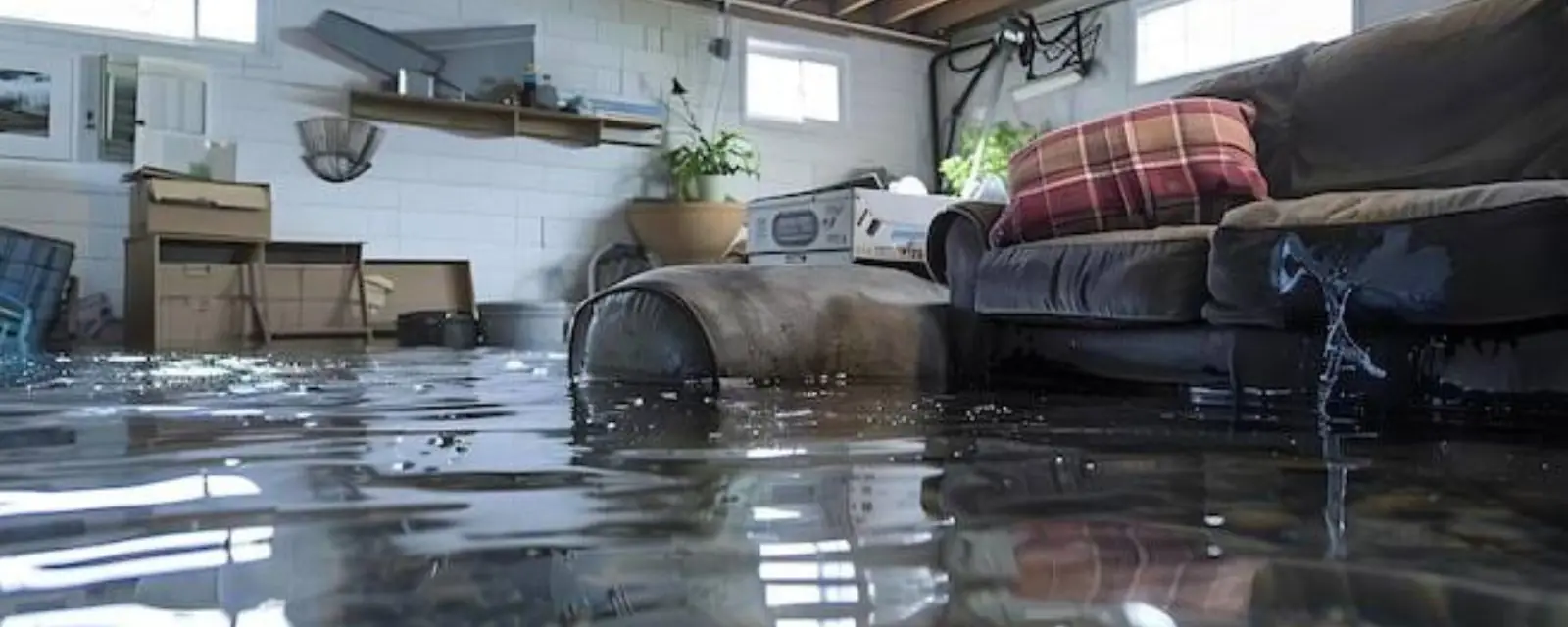
What professional basement flood cleanup services actually do
Professional basement flood cleanup services in Holliston, MA do four jobs in order: stop and remove the water, take out what cannot be saved, dry the structure, and sanitize what remains. The company you hire should be able to explain each of those stages in plain language before anyone carries in a pump.
Most of the value sits in stages two and three. Anyone can run a wet vac. Knowing which materials to discard and when the framing is actually dry takes moisture readings, not guesswork.
If water is still coming in, flood damage restoration starts with the safety steps below. The pumping and drying follow.
Before anyone arrives: safety and a few photos
Shut off the electricity to the basement only if you can reach the panel without stepping in water. If the panel is wet or the floor is under standing water, stay out and call the utility or an electrician. The state Department of Public Health's homeowner guide says to shut off gas and electric first, and it also tells people to assume floodwater is contaminated by sewage or chemicals.
That assumption changes how the cleanup is done. Boots, gloves and no bare skin in the water are the minimum until a crew arrives.
- Photograph the waterline on the walls and the items sitting in water before anything moves
- Take video of the room from the stairs, then close-ups of damaged appliances and mechanicals
- Lift small valuables and paper to a dry floor above, but leave heavy furniture alone
- Note when you first saw the water and where it seemed to enter
- Keep the sump pump discharge clear if the pump is still running
What a good first visit looks like
A competent crew starts by finding the water source and the water depth, then testing the surrounding materials. Expect a moisture meter on the drywall and framing, and a thermal imaging camera to trace dampness behind finished walls. The tech should tell you what the readings mean as they go.
Next comes extraction. Truck-mounted or portable extraction units pull standing water, then the crew removes wet carpet pad, baseboards and the lower section of wallboard that took on water. Wet insulation comes out as well.
Drying equipment is set only after the demolition, since air movers blowing across soaked drywall mostly spread moisture around. LGR dehumidifiers and air movers then run until readings return to the dry standard for the materials. That usually takes days, not hours.
Drying is measured, not guessed. See how water mitigation and structural drying is documented from the first reading to the last.
Questions worth asking every company on the phone
You can screen a company in five minutes if you ask for specifics. Vague answers are an answer in themselves. The questions below separate crews that run documented jobs from crews that show up with a fan and a handshake.
| Question | A solid answer | A weak answer |
|---|---|---|
| Are you licensed and insured? | Yes, and they can send proof of coverage on request | Dodges the question or says it is not needed |
| How do you decide what to tear out? | Moisture readings, water category and material type | Take out everything below four feet |
| How will you document drying? | Daily moisture logs with dated readings | We will tell you when it feels dry |
| Do you follow a published standard? | Names ANSI/IICRC S500 as the reference for water damage work | Has never heard of it |
| What is in the written scope? | Rooms, materials removed, equipment, labor and exclusions | A single lump figure by text |
| Who handles the rebuild? | Clear split between mitigation and repair, with a plan for each | Promises to fix everything for the same figure |
ANSI/IICRC S500 is a published industry standard for professional water damage restoration. Any company can be asked about it, and a good one will answer without reaching for a sales line.
Red flags that should end the conversation
Pressure is the biggest one. A company that wants a signed contract at the door before it has measured a thing is selling, not assessing. A scope and price should be explained before work starts, and you should get that in writing.
Be wary of anyone who promises an exact outcome with your insurer. Nobody outside the claims department can promise a claim result, and anyone who says otherwise is making it up.
- No moisture meter or thermal camera on the first visit
- Refusal to describe the equipment that will run and for how long
- Pushing you to discard or keep everything without looking at material types
- Telling you the basement can be sanitized and left wet because the smell is gone
- Asking for full payment up front for work not yet scoped
- No clear answer on who will be responsible for the dehumidifier and air mover count
Also notice who answers the phone. A dispatcher who asks where the water is coming from, how deep it is and whether the power is off is doing the job properly.
Finished basement or bare concrete: how the plan changes
A bare concrete basement with a floor drain can often be pumped, rinsed and dried quickly. A finished basement with carpet, pad, framed walls and insulation is a bigger job, because every wet layer holds water against the next one.
In a finished space the crew usually removes carpet and pad first, then cuts wallboard above the waterline until readings drop to dry. Paneling, built-ins and cabinets get checked individually, since solid wood and laminate behave differently once soaked.
| Basement type | First priority | Usual outcome for wet materials |
|---|---|---|
| Unfinished concrete | Extraction and rinse | Dry in place, sanitize surfaces, discard stored cardboard |
| Carpet over slab | Pull carpet and pad | Pad is discarded, carpet depends on water category |
| Framed and drywalled | Open walls to check cavities | Discard wet wallboard and insulation, dry the studs |
| Finished with mechanicals | Isolate power and gas | Furnace and electrical need a licensed tradesperson to inspect |
Where Holliston basements take on water
Same-day response and what happens next
When you call, expect questions about water depth, the source and whether anyone has been in the water. We offer same-day response when available, and the dispatcher will tell you honestly if a crew cannot reach you right away.
The cleanup steps are the same across town lines. Milford's municipal vulnerability report names Charles River flooding, and in Medway Hopping Brook along Route 109 floods. What changes house to house is how much of the basement was finished.
A cleanup is not plumbing and not waterproofing. If the water entered through a failed foundation crack or a sump pump that quit, the crew can dry the space, but a plumber or waterproofing contractor has to correct the entry point or the basement will flood again.
Insurance and paperwork while the basement dries
The Massachusetts Division of Insurance notes that standard homeowners policies do not cover flood damage, although a sump pump or water backup endorsement may provide some coverage. Read your policy, report the loss to your insurer right away and keep every photo and moisture log.
Nobody can promise how a claim will turn out. What a restoration company can do is document conditions, list what was removed and keep dated drying records, all of which make the conversation with your insurer easier.
Frequently asked questions
How much does professional basement flood cleanup cost?
It depends on water depth, water category, the square footage affected, how much is finished and how many days of drying equipment the readings call for. A written scope should list those line items so you can compare two quotes on the same terms.
Anyone who quotes a single figure before seeing the basement is guessing.
How soon should flooded basement cleanup start?
As soon as it is safe to enter. State guidance asks for a full dry-out inside 24 hours when possible, and the Housing Code sets a 48-hour limit for leak and flood water.
Those are targets, and deep water or hidden wet insulation can push the job past them.
Can I clean up a flooded basement myself?
A small, clean-water leak on bare concrete is often a homeowner job. Anything involving sewage, standing water over an outlet, or finished walls needs professional extraction and moisture testing.
Assume contamination, the state advises, and throw out wet wallboard, trim and insulation.
What equipment will the crew use?
Typically an extraction unit, air movers, LGR dehumidifiers, a moisture meter and a thermal imaging camera. If mold-prone materials are disturbed, HEPA air scrubbers may be added.
Ask the company to list the equipment in the written scope.
Does insurance pay for basement flood cleanup?
It depends on the cause. Sudden and accidental water damage from a burst pipe is often covered, but flood damage is usually excluded and needs separate flood coverage or a water backup endorsement.
Check your policy and ask your insurer before you decide how to proceed.
Do I need a permit for the rebuild after a basement flood?
Plumbing, wiring and structural repairs may need permits, which the Holliston Building Department handles, along with inspections. Cleanup and drying alone usually do not involve permits.
Ask the department before replacing electrical panels, framing or plumbing runs.
What should I do first if Washington Street floods near my property?
Stay clear of the water, shut off the electricity if you can do so safely, and photograph the waterline. The Holliston Hazard Mitigation Plan notes Washington Street near number 1929 floods in large storms, so expect road access to be affected.
Call for help early so the crew can plan the route and equipment.
Dealing with this right now?
Call the 24/7 line. Scope and price are explained before work starts.
☎ Call (508) 446-9244