Why mold remediation cost varies so much
Mold remediation cost in Holliston, MA depends on how much material is affected, what that material is, how the area must be contained and what happens after cleanup to prove it worked. There is no honest flat rate because two homes with the same visible patch can have very different hidden growth.
This page does not quote numbers. It shows how the price is built so you can read an estimate and tell a real scope from a lump sum.
Expect the price to rise with the amount of material removed, the level of protection needed and the number of days equipment runs. Expect it to fall when the problem is caught early, on hard surfaces, in a room that is easy to seal off.
The main cost factors
Remediation pricing follows labor, materials, equipment and disposal. Size is only one part of it. The factors below are the ones that most often move a quote.
- Affected area and depth: surface growth versus growth inside drywall, insulation or framing
- Material type: hard surfaces clean, soft materials are removed
- Location: crawl spaces, attics and tight corners take more labor and protection
- Containment level: plastic sheeting, zipper doors, negative air
- Air filtration: HEPA air scrubbers running during and after work
- Access and occupancy: furniture to move, occupied rooms, stairs and parking
- Moisture source: plumbing or roofing repair is a separate trade and a separate price
- Rebuild: new drywall, insulation, flooring and paint after removal
Containment and air control: where scope gets real
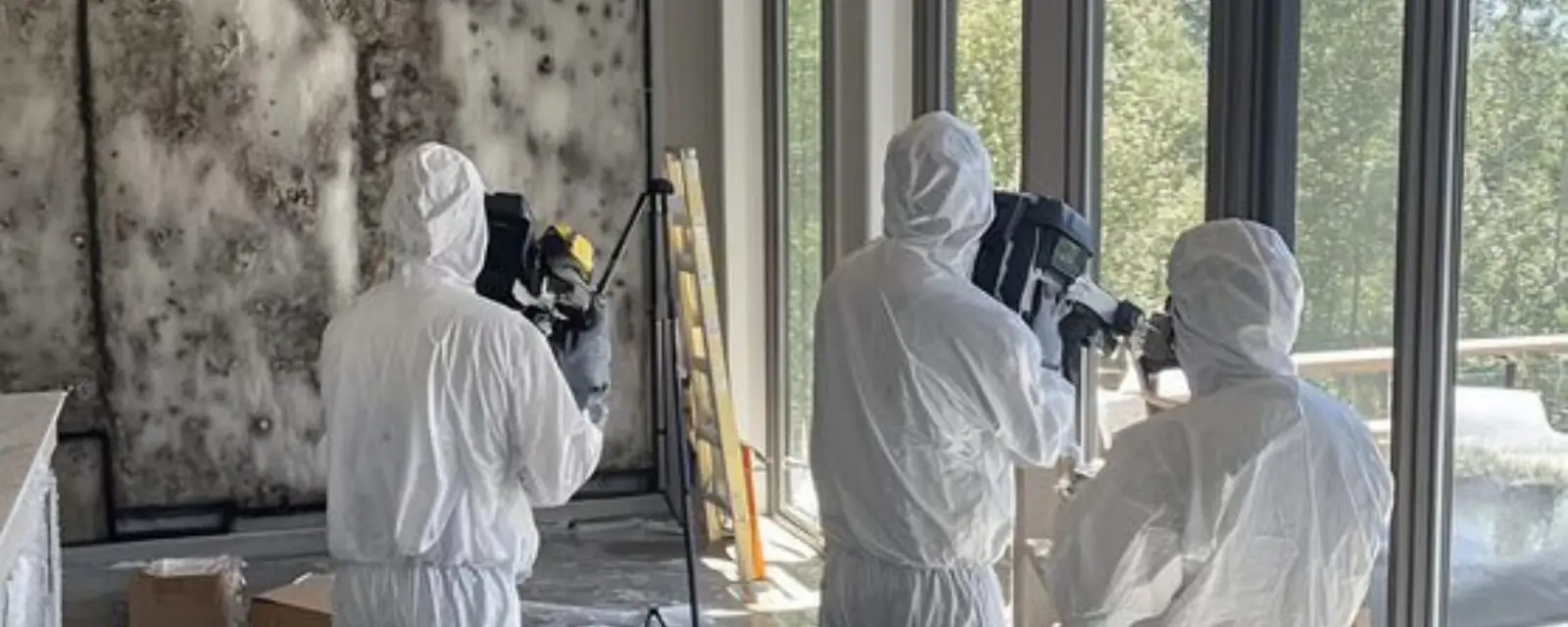
Disturbing mold releases spores. Containment keeps them in the work area. Crews hang polyethylene sheeting, seal vents and run negative air machines that pull air through HEPA filters and exhaust it outdoors, so air flows into the work area, not out of it.
A small bathroom patch may need little more than a barrier and an air scrubber. A basement wall with growth behind finished drywall needs full containment, protective gear and careful disposal. The difference shows up in the equipment and labor lines.
ANSI/IICRC S520 is the published standard for mold remediation. Ask any company how its containment and cleaning steps follow it.
Testing, clearance and who does what
Some jobs include a post-remediation check by a third party to confirm that the work area is clean and dry. Others rely on visual inspection and moisture readings. Neither is automatically better, and the state sets no official limit for a safe level of mold.
If testing is part of the scope, ask who performs it. A conflict of interest arises when the company that cleans also writes the clearance. A separate tester is the cleaner arrangement, and it is priced separately.
Be cautious about testing sold before anyone has found the moisture source. A lab result on an air sample is a snapshot, and it does not tell you where the water is coming from or what has to be removed. Walk the property with the contractor first, then decide whether testing adds anything to the plan.
What a line-by-line estimate looks like
| Section | What it should state | Question to ask |
|---|---|---|
| Assessment | Where growth and moisture were found, with photos and readings | How was the extent of hidden growth checked? |
| Containment | Barriers, entry method, negative air, filtration | How will air be controlled and exhausted? |
| Removal and cleaning | Which materials come out, which are cleaned, how | Which items are removed and which are cleaned in place? |
| Disposal | Bagging and removal of debris | Who handles disposal and where does debris go? |
| Drying | Equipment and readings to confirm dryness | What readings mean finished? |
| Verification | Visual check, moisture readings, optional third-party testing | Who confirms the work and how? |
| Rebuild | New drywall, insulation, paint, flooring | Is rebuild included or separate? |
How to compare two or three quotes fairly
Ask each company to inspect the same areas and write the scope in the same level of detail. If one estimate lists containment and negative air and another does not, the second one is either leaving it out or planning less protection. Both are red flags worth asking about.
Compare what is included, not only what is at the bottom. Check whether rebuild is in or out, whether moisture correction is part of the scope or left to you and whether testing is included. Our mold remediation scopes spell these out in writing, and scope and price are explained before work starts.
No state license, so the paperwork matters
Insurance and mold: ask before you start
Mold coverage varies widely between policies. Sudden and accidental water damage is often covered, and mold that results from it may be covered in part. Gradual leaks and neglect often are not. Flood damage is usually excluded and needs separate flood coverage.
Read the mold language in your policy and call your insurer before major demolition. Photograph the damage. No restoration company can promise how a claim will turn out.
How scope differs by job type
A bathroom ceiling patch, a basement wall and a post-flood cleanup are three different jobs even if the mold looks similar. The differences show up in the estimate as protection, labor days and disposal.
- Small surface growth on sealed material: cleaning, drying and a moisture check, often no full containment
- Growth on drywall or ceiling board: cut-out, bagging, air scrubbers and a patch, often paired with water damage repair afterward
- Growth in a wet basement or crawl space: containment, dehumidification and often framing cleaning
- Growth after flooding or sewage: removal of porous materials under the state Department of Public Health's guidance, with the drying handled as water mitigation
Ask each company which of these it believes your job is, and why. The reasoning behind the answer matters more than the label.
Moisture repair: the cost people forget
Remediation removes mold but does not fix the water that fed it. A roof leak, a plumbing leak or a damp foundation needs its own repair by the proper trade. If this is not done, mold can return and the first bill is wasted.
Towns around Holliston face the same issue. Sherborn has no public water or sewer, only private wells and septic, so every property handles its own plumbing and drainage. Ashland lists 12 locally known flood sites in its draft hazard plan. In both places the pattern holds: fix the water first, then price the mold.
Frequently asked questions
Why do mold remediation quotes differ so much?
Differences usually come from scope. One company may include containment, air filtration and rebuild while another prices only cleaning. Match the estimates line by line before you compare the totals.
Does the price include fixing the leak?
Usually not. Restoration is not plumbing, roofing or waterproofing. A good scope states clearly who handles the moisture source and whether that cost is separate.
Do I need testing after remediation?
It depends on the job and your preference. A clearance check can add confidence, especially after larger work. Ask who performs it and whether it is a separate cost from the remediation.
Will insurance cover mold remediation?
It depends on the policy and the cause. Mold that follows sudden, accidental water damage may be covered in part, while mold from long-term leaks often is not. Ask your insurer.
Can I lower the cost by removing drywall myself?
Sometimes, but removal without containment can spread spores through the house. Agree on the scope with your contractor before you start, and wear proper protection.
What should a Holliston homeowner ask for, since Massachusetts has no mold remediation license?
Ask for a Statement of Qualifications and references, as the state Department of Public Health's homeowner guide advises, plus a written scope. Compare those documents before comparing price.
Dealing with this right now?
Call the 24/7 line. Scope and price are explained before work starts.
☎ Call (508) 446-9244