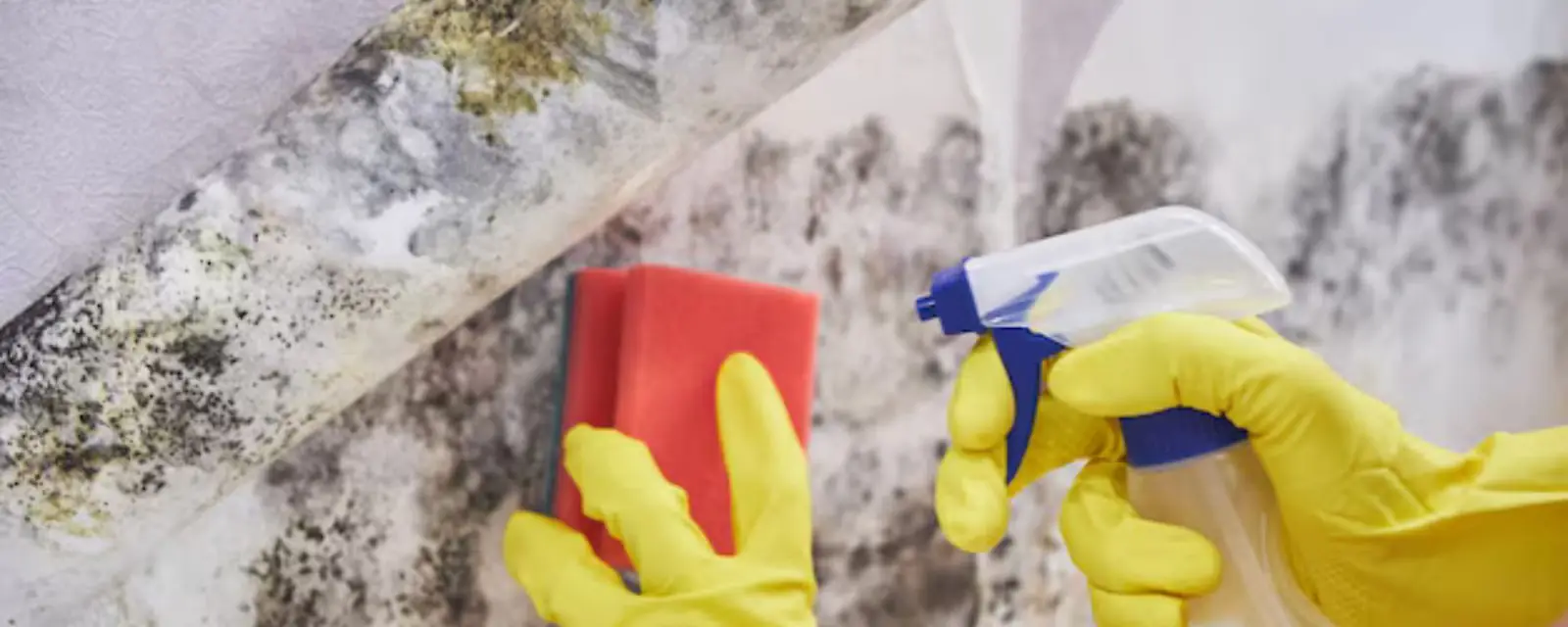
The short version: when you can clean it yourself
How to clean mold off a ceiling in Holliston, MA depends mostly on size and cause. Per the state homeowner guide, a light surface film often needs only detergent and water. That applies to a small patch on a painted, hard ceiling where the moisture problem is already fixed.
If the patch is large, the board is soft, or the mold keeps returning, cleaning the surface is the wrong first step. Find the water source before anything else.
Questions about health effects belong with a physician, not a cleaning guide. This page covers the cleaning only.
Find why the ceiling is wet before you scrub
Mold grows where moisture lingers. A ceiling stays damp from a roof leak, a bathroom fan that vents into the attic, a pipe above, or condensation on a cold surface. Cleaning without fixing that cause just resets the clock.
Check the area above the stain for wet insulation, rusty fasteners or a damp attic floor. If you find active water, call a plumber or roofer for the source, then bring in water damage repair if wallboard is wet or sagging.
| Location | Likely source | Fix the source first |
|---|---|---|
| Bathroom ceiling | Steam with weak or missing exhaust | Run or replace the fan, vent it outdoors |
| Under a bathroom or kitchen | Leaking supply line or drain above | Plumber to repair, then dry the cavity |
| Below a roof edge | Roof leak after rain or snowmelt | Roofer to repair, then dry the insulation |
| Near a vent or register | Condensation from ducts | HVAC technician to check insulation and drain lines |
| Corner of an exterior wall | Cold surface with trapped humid air | Improve airflow, check insulation |
Protective gear, in plain terms
Disturbing mold sends spores into the air, so cover up before you start. Wear an N95-type respirator or a mask rated for fine dust, snug-fitting goggles without vent holes, and long rubber or nitrile gloves. Wear old long sleeves you can wash right away.
Open a window if possible and keep fans from blowing spores to other rooms. Close interior doors and tape plastic over vents in the room. Set up before you open anything, not after.
- N95 or better respirator, fitted to your face
- Goggles that seal around the eyes
- Nitrile or rubber gloves
- Long sleeves and a hat you can wash
- Plastic sheeting and painter's tape
- Two buckets, soft sponges and clean rags
- Heavy trash bags for the used materials
Step by step: cleaning a small patch
Use this method only on a painted, solid ceiling with a patch smaller than a dinner plate. If the paint is peeling, the board is soft or the area is larger, skip ahead to when to stop.
- Cover the floor with plastic and set a ladder on stable ground
- Mix a squirt of dish detergent in a bucket of warm water
- Dampen a sponge, wring it out and wipe the patch gently, never soaking the ceiling
- Rinse the sponge in the second bucket often and change water when it turns dark
- Wipe the area with a clean damp cloth, then dry it with a fan on low and a dry towel
- Bag the rags and sponge before leaving the room
- Check the area again in a few days and watch for staining or return
Drywall paper absorbs liquid, so use as little water as possible and dry quickly. Wet ceilings can sag.
What not to do
Do not mix bleach with ammonia or other cleaners. The fumes can be dangerous, and bleach is rarely the answer on porous surfaces like drywall because it does not reach roots below the surface. Do not dry-scrub, sand or brush a moldy ceiling, since that throws spores into the air.
Do not paint over mold, even with a stain-blocking primer, until the cause is fixed and the surface is clean and dry. Paint hides a problem, and the patch reappears through it.
- Do not spray the ceiling until it is soaked
- Do not run a bathroom fan blowing spores through the house while you clean
- Do not use a household vacuum without a HEPA filter
- Do not cut into a ceiling without checking for wires and pipes
- Do not promise yourself the mold will never return
Signs it is time to stop and call someone
Some ceilings are beyond a sponge. Call for help when the patch is large, the board is soft or bulging, the mold returns after cleaning, or the growth spreads across more than one room. Also stop if you find wet insulation, suspect sewage or floodwater, or cannot locate the source.
Our mold remediation page explains how a professional scope handles containment, HEPA air scrubbers, negative air machines and removal of affected board. Because no official threshold defines a safe level, size and cause matter more than a number.
Choosing a mold contractor in Massachusetts
The state guide says there are no licenses required to conduct mold remediation in Massachusetts. That puts the burden on you to ask for a written scope, a Statement of Qualifications and references. Ask about the published ANSI/IICRC S520 standard for mold remediation, which any company can be asked about.
Be wary of anyone who offers a sweeping promise that mold will never return. Mold comes back wherever moisture does, so the real fix is moisture control. Plumbing, electrical or structural work found during the job may need licensed professionals.
What local rainfall says about ceiling dampness
Prevent the next patch: a short routine
Run bathroom fans during showers and for a while after. Vent exhaust outdoors, not into the attic. Check the ceiling below any bathroom or roof edge each season, and look in the attic after big storms.
The routine travels well. In Medway, 21 percent of homes were built before 1939, and in Ashland a draft hazard plan recorded 17.7 inches of rain over 19 days in March 2010, so older roofs and long wet spells are worth watching. The goal is moisture control, not chemicals.
Frequently asked questions
Can I use bleach to clean mold off a ceiling?
The cleaning method that guide favors for light growth is detergent and water. Bleach does not reach below the surface of porous drywall and should never be mixed with ammonia or other cleaners.
What is the safest way to clean a small patch of ceiling mold?
Wear an N95-type respirator, goggles and gloves, then wipe the patch with a damp sponge and detergent in water. Use as little water as possible, dry the area quickly and bag the rags afterward.
Is it safe to paint over ceiling mold?
No. Painting without fixing the moisture and cleaning the surface hides the problem and it tends to reappear through the paint.
How do I know if the mold is bigger than it looks?
Check for soft or bulging board, a musty smell that returns, staining that spreads and wet insulation above. If the ceiling is sagging, stop cleaning and call a professional.
Do I need a licensed company to remove ceiling mold in Massachusetts?
The state Department of Public Health's guide says no license is required for mold remediation in Massachusetts. Ask contractors for a Statement of Qualifications, references and a written scope.
Can a restoration company promise the mold will not come back?
No honest company can. Mold returns when moisture does, so fixing the leak or humidity source is what prevents repeat growth.
How much rain and snow do nearby weather stations record?
NOAA's 1991-2020 normals list 48.26 inches of precipitation and 72.9 inches of snow at Worcester Regional Airport, and 43.59 inches and 49.2 inches at Boston Logan. Check your attic and ceilings after wet stretches and thaws.
Dealing with this right now?
Call the 24/7 line. Scope and price are explained before work starts.
☎ Call (508) 446-9244