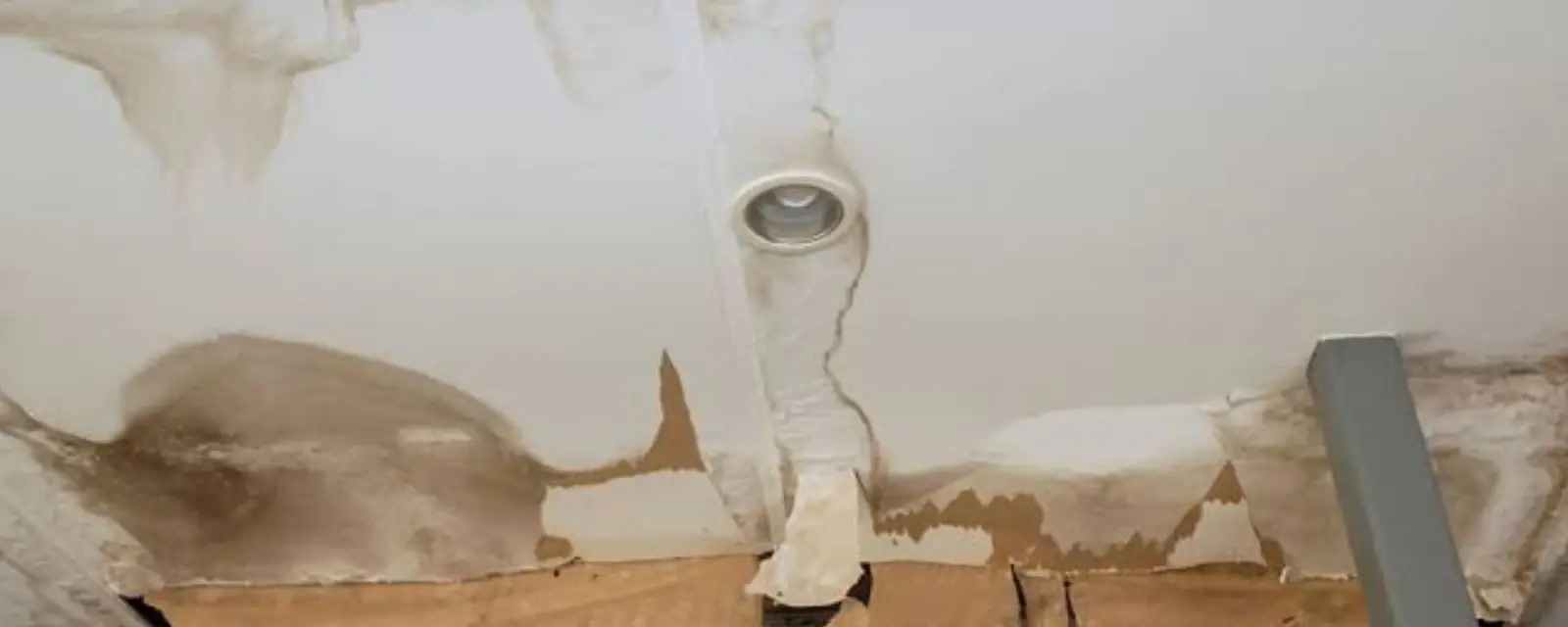
What a stained or bulging ceiling is telling you
Ceiling damage from water in Holliston, MA almost always means water has collected in the space above the drywall. A yellow or brown ring is old or slow water. A bulge or a sag means water is still sitting there and the ceiling is carrying its weight.
The first job is to work out whether the source is still active. A stain that darkens after rain points to the roof. A stain that grows after someone showers points to the bathroom above. A stain that never changes shape may be old and dry, but only a moisture reading can say for sure.
If the ceiling is bowed or dripping, skip ahead to the drain steps below. Our emergency water removal crews can be sent when the situation can't wait.
Causes ranked by source
Not every ceiling stain has the same origin. This ranking reflects how these jobs commonly arrive, and your house may differ.
| Source | Typical clue | Next step |
|---|---|---|
| Roof or flashing leak | Stain darkens after rain or snowmelt, often near a wall or chimney | Roofer finds and seals the opening, then dry the attic and ceiling |
| Upstairs bathroom | Stain below a tub, shower or toilet, grows after use | Plumber checks supply, drain and seals, then dry the floor cavity |
| HVAC condensate | Stain near an air handler or duct, worse in humid weather | HVAC technician clears the drain line and checks the pan |
| Supply or heating pipe | Constant drip, stain with no relation to weather or use | Shut off water, call a plumber at once |
Roof leaks and plumbing leaks are both common, and plumbing leaks are the fastest to cause serious damage. A leak from a pressurized line does not wait for the next storm.
The bulge, drain and open steps
A bulging ceiling is holding water, and it can fail without warning. Clear the area below it, move furniture and cover the floor. Then work through these steps:
- Shut off power to the room at the breaker if the ceiling fixture or fan is wet
- Place a bucket and plastic sheeting under the lowest point of the bulge
- Stand to one side and poke a small hole at the center of the bulge with a screwdriver
- Let the water drain fully, then widen the hole slightly if it runs slowly
- Take photos before and after, and keep any wet material for the adjuster
This relieves the weight and protects the rest of the ceiling. It does not fix the leak or dry the cavity. A ceiling that has already bowed usually needs to be cut open so the insulation above can be checked.
What the attic or upstairs side tells you
Go up and look before you judge the ceiling from below. In the attic, check the underside of the roof deck near the stain for dark streaks, wet insulation or daylight at a flashing. On an upper floor, check the bathroom, laundry and any room with a heat line.
Photos help your roofer or plumber. Take one wide shot of the room and one close shot of each wet spot, then note the time and the weather that day. A leak that tracks with rain and a leak that tracks with showers are very different jobs.
Do not walk on joist bays that hold wet insulation, since the drywall below may not carry your weight. If the ceiling already looks wavy, stay off the floor above it and let the crew make the access cut.
When a ceiling comes down and when it can stay
A patch works when the water was brief, the drywall is firm and the readings drop to normal after drying. Replacement is needed when the board has softened, cracked across a joint or sagged away from the joists.
Crews also open ceilings to reach the cavity, even when the drywall looks salvageable. Wet insulation stays damp for weeks and rots the framing and the back of the board.
- Drywall that feels soft or crumbles when pressed
- A sag deeper than a thumb's width between joists
- Paint that peels in sheets or stains that return after painting
- Visible mold growth on the back of removed board
- Insulation that is clumped, dark or still cold and damp
Cutting a clean rectangle that lands on joist centers makes the new board easier to hang and finish. Scope and price are explained before work starts.
Insulation above the ceiling
Insulation takes in water like a sponge and holds it against the framing. Fiberglass batts that were wet lose their R-value and rarely dry on their own. Blown cellulose clumps and sags, and it keeps the board above the joist damp.
We take out wet insulation instead of trying to dry it in place. After the cavity reads dry, new insulation goes in before the ceiling is closed.
If your attic is wet from a roof leak, the roofer stops the water and our crews dry the space. This sequence is part of water mitigation, and the rebuild then follows through water damage repair.
Temporary protection while you wait
A tarp or sheet of plastic keeps rain off a roof opening until the roofer arrives, but only if someone can reach it safely. Never climb a wet or snowy roof to place one yourself. Inside, move furniture, roll up rugs and cover what remains with plastic.
Open interior doors so air can move, and run a fan across the wet area if it is safe to do so. Keep children and pets out of any room with a bowed ceiling. Water-soaked drywall can drop with little warning.
Turn off power to a room if water has reached a ceiling light or fan box. Once the area is safe, call us and describe what you see. Our flood damage restoration page covers larger events where water came from outside the house.
Mold on a wet ceiling
Ceiling drywall and insulation can grow mold if they stay wet beyond a day or two. Public health guidance in Massachusetts puts the drying target at one day where it can be met. Beyond that, expect to inspect the back of the board and the framing.
If you see dark growth, do not scrub or spray it into the air. Questions about health belong with a physician. Our mold remediation page covers containment and what a written scope should say.
A moisture reading, a visual check of the back of the board and the smell test all feed the decision. No single test tells the whole story.
Insurance, documents and nearby towns
Sudden and accidental water damage is often covered, and gradual leaks and neglect often are not. Take photos of the stain, the source if visible, and the contents below it. Keep wet material until the adjuster has seen it if possible.
The same ceiling problems show up in nearby towns. Medway reports that 21 percent of its homes were built before 1939, and homes in Hopkinton have the same cycle of snowmelt and spring storms. Ask your insurer what applies to your policy.
The Holliston Building Department handles building and plumbing permits, so ask them whether your repair needs one before you start structural work.
Frequently asked questions
Should I pop a bulging ceiling?
If it is clearly holding water, a small hole at the lowest point lets it drain in a controlled way. Stand to the side, protect the floor below and expect the board to need replacement.
Can I paint over a water stain on a ceiling?
Only after the source is fixed and the area reads dry. Stain blocking primer helps, but paint over a wet ceiling traps the moisture and the stain tends to return.
How do I know if the stain is old or active?
An active stain has a soft or damp edge and may grow. A moisture meter or thermal imaging camera confirms whether the ceiling is still wet.
Does the whole ceiling have to come down?
Not always. A localized leak often needs only a section opened, cut at joist lines. A ceiling that sagged across a whole room is usually replaced.
Is a ceiling leak after rain a roof problem or a restoration problem?
Both. A roofer stops the water, and restoration dries and rebuilds what got wet. Fixing only one leaves the other half of the job undone.
Why would a Holliston ceiling leak after a thaw instead of during the snow?
Snow sits on the roof until it melts, and meltwater can seep under flashing and edges. The Holliston Hazard Mitigation Plan (2024) notes heavy snow increases flooding risks when the snow melts, so stains often follow a warm spell.
Dealing with this right now?
Call the 24/7 line. Scope and price are explained before work starts.
☎ Call (508) 446-9244