Can wet carpet be saved? The short answer
Carpet water damage in Holliston, MA can often be saved if the water was clean, the carpet is dried fast and the pad and subfloor are checked. If the water was contaminated or the carpet stayed wet for days, replacement is the safer call.
Three questions decide it: what kind of water was it, how long was it wet, and what is underneath? Carpet is only the top layer. The pad, the tack strip and the subfloor all take on water, and they dry at different speeds.
If the floor is still wet, extraction comes first. Our emergency water removal crews can start pulling water while you sort out the rest.
Water category and the save-or-replace decision
Restoration professionals classify water by source. The industry standard ANSI/IICRC S500 describes these categories, and any company you hire should be able to explain how it applies them to your job.
| Water type | Examples | Carpet outcome |
|---|---|---|
| Clean supply water | Broken supply line, overflowing sink, leaking ice maker | Often saved if extracted and dried promptly |
| Gray water | Washing machine or dishwasher overflow, aquarium leak | Case by case, pad usually replaced |
| Black water | Sewage backup, river or surface flooding | Carpet and pad discarded |
| Clean water left too long | Any clean source that sat for days | May degrade into higher risk, often replaced |
State health guidance treats floodwater as possibly carrying sewage or chemicals, so anything porous that soaked in it should go. Carpet and pad are porous.
The pad is usually the first thing to go
Carpet pad is foam or rebond material that acts like a sponge. It soaks up water faster than the carpet above it and dries much slower. Even when the carpet is saved, the pad is replaced in most cases because it is inexpensive compared with the risk of leaving it wet.
Pad that stays wet breeds odor and stains the back of the carpet. Replacing it also lets crews dry the subfloor directly, which is the layer that matters most.
The carpet itself is lifted, held clear of the floor and dried with air movers while the subfloor is treated. Reinstalling it needs a power stretcher so it lies flat again.
How long carpet and pad take to dry
Drying time depends on how much water soaked in, how thick the pad is and how humid the air is. A thin spill dries quickly with air movers. A flooded basement with thick pad can take several days and will not finish by feel alone.
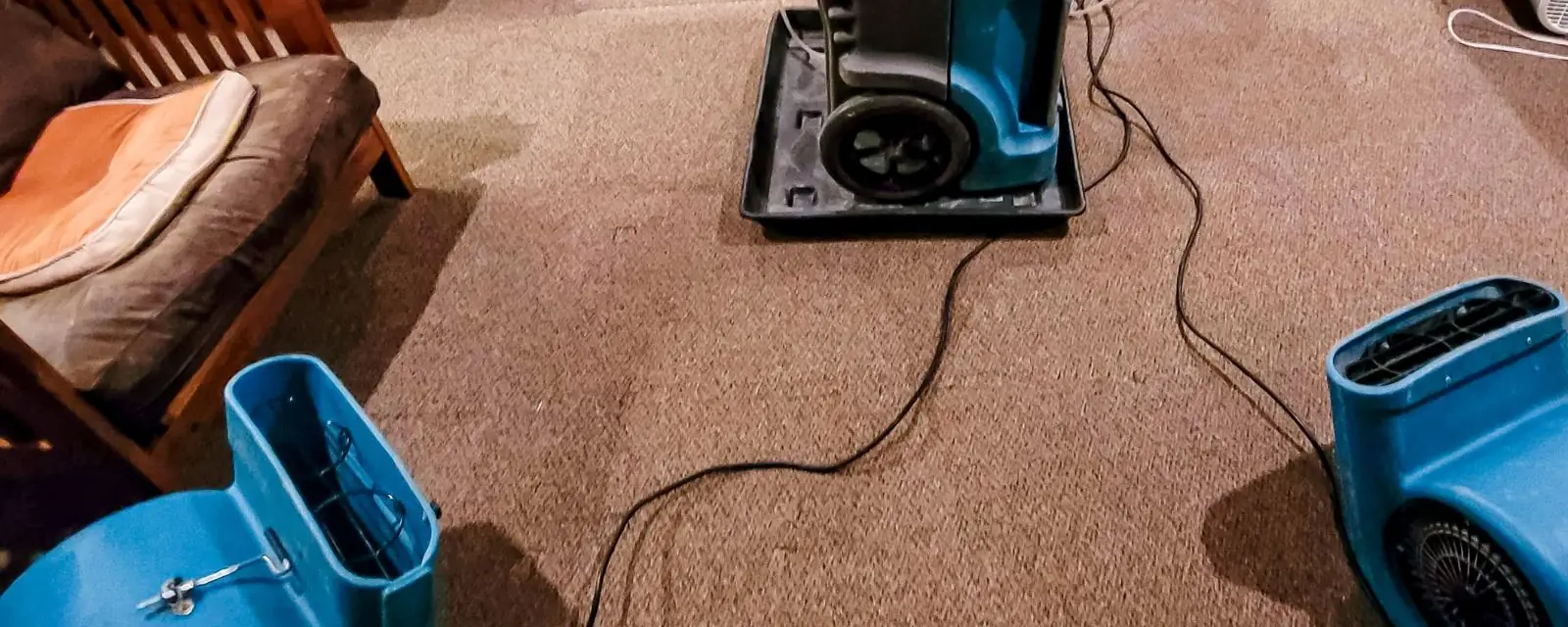
Crews use moisture readings as the finish line. They place air movers so each blows along the surface and use LGR dehumidifiers to pull moisture from the air. They check daily and move equipment as the wet zones shrink.
Opening windows helps only when the outdoor air is drier than the indoor air. After a storm or in a damp spring, a dehumidifier does more than an open window. This is why professional drying uses closed rooms and controlled equipment.
Tack strip, subfloor and what lies beneath
Tack strips are wood strips with pins that hold carpet along the walls. They can swell, split and hold moisture against the baseboard. If they stay wet, they are replaced during reinstall.
Plywood and oriented strand board subfloors swell when soaked. Concrete slabs hold water and release it slowly, which is why basements stay damp long after the surface looks dry.
- Subfloor that feels soft, springy or raised at the seams
- Tack strips that are dark, loose or splitting
- A musty smell that returns once the fans are off
- Baseboards that have swollen or pulled away from the wall
- Cold, clammy concrete that stays damp to the touch
Moisture meters read the subfloor and the slab separately. Readings guide the decision, not the look of the surface.
Cleaning carpet that can be saved
Once the carpet and pad are dry, the carpet is cleaned with hot-water extraction or another method suited to the fiber. Cleaning removes dirt carried in by the water, releases odor and brings the nap back up. It is done after drying, not before, because cleaning adds water.
Wool and natural fibers shrink or stain more easily than nylon or polyester. Backing type matters too, since jute backing holds water and can release brown stains. A careful inspector checks these details before promising a result.
If stains or odor stay after cleaning, the carpet may be near the end of its life. At that point, replacing it takes less effort than repeated attempts to rescue it.
Drying carpet in place versus lifting it
When the water was clean and the carpet is glued down or stretched over firm pad, crews sometimes dry it in place. They float the carpet, flush the pad with air and monitor readings until the layers match dry standards.
When the pad is saturated, the carpet is pulled up and the pad removed. The subfloor then gets direct airflow and a dehumidifier, which is faster and more reliable than trying to dry through layers.
The drying equipment is part of water mitigation. It typically runs for several days and ends when readings return to normal for the room.
Odor, mold and when to give up on a carpet
A musty smell after carpet gets wet is the first sign of microbial growth. Odor treatment is only worth doing after the moisture is gone. Deodorizers placed over damp material cover the problem for a short time.
Light surface mold on a hard surface can be cleaned with detergent and water, per the state guide. Carpet is porous and cannot be cleaned that way. If you see growth on the pad or the back of the carpet, those materials are removed. See our mold remediation page if growth has spread.
Questions about health effects belong with a physician. No one can promise that mold will not return, so fix the moisture source and keep humidity down.
Replacement, insurance and nearby towns
Replacing carpet means matching the style, laying new pad and rebuilding the transition at doorways. If only one room is affected, the new carpet may not match the next room, which is worth discussing with your insurer.
Sudden and accidental water damage is often covered. Flood damage is usually excluded and needs separate flood coverage. Photograph the damage and report the claim promptly.
Crews also work in Sherborn and Milford, where finished basements raise the same questions. For the rebuild after drying, see our water damage repair page.
Frequently asked questions
How long can carpet stay wet before it must be replaced?
There is no single deadline. Clean water caught quickly gives the best chance. The state guide says to dry wet areas within 24 hours if possible and requires drying within 48 hours under the Housing Code.
Is carpet saved after a sewage backup?
No. Carpet and pad that touch sewage or floodwater are discarded because they are porous and cannot be reliably cleaned.
Why is the pad replaced if the carpet is fine?
Pad holds water and dries slowly, and it can hide mold and odor. Replacing it lets crews dry the subfloor directly.
Can I rent a wet vac and handle it myself?
For a small clean spill, yes. For anything that soaked the pad or reached the subfloor, rented equipment rarely dries the layers underneath.
Will the new carpet match the old one?
Often it will not match exactly. If a whole room is replaced, the transition point at the doorway helps hide the change.
Is basement carpet near Holliston's brooks at higher risk?
It can be. The Holliston Hazard Mitigation Plan (2024) maps Zone A and Zone AE areas along Beaver Brook, Hopping Brook, Chicken Brook and Bogastow Brook, and floodwater is treated as contaminated.
Dealing with this right now?
Call the 24/7 line. Scope and price are explained before work starts.
☎ Call (508) 446-9244