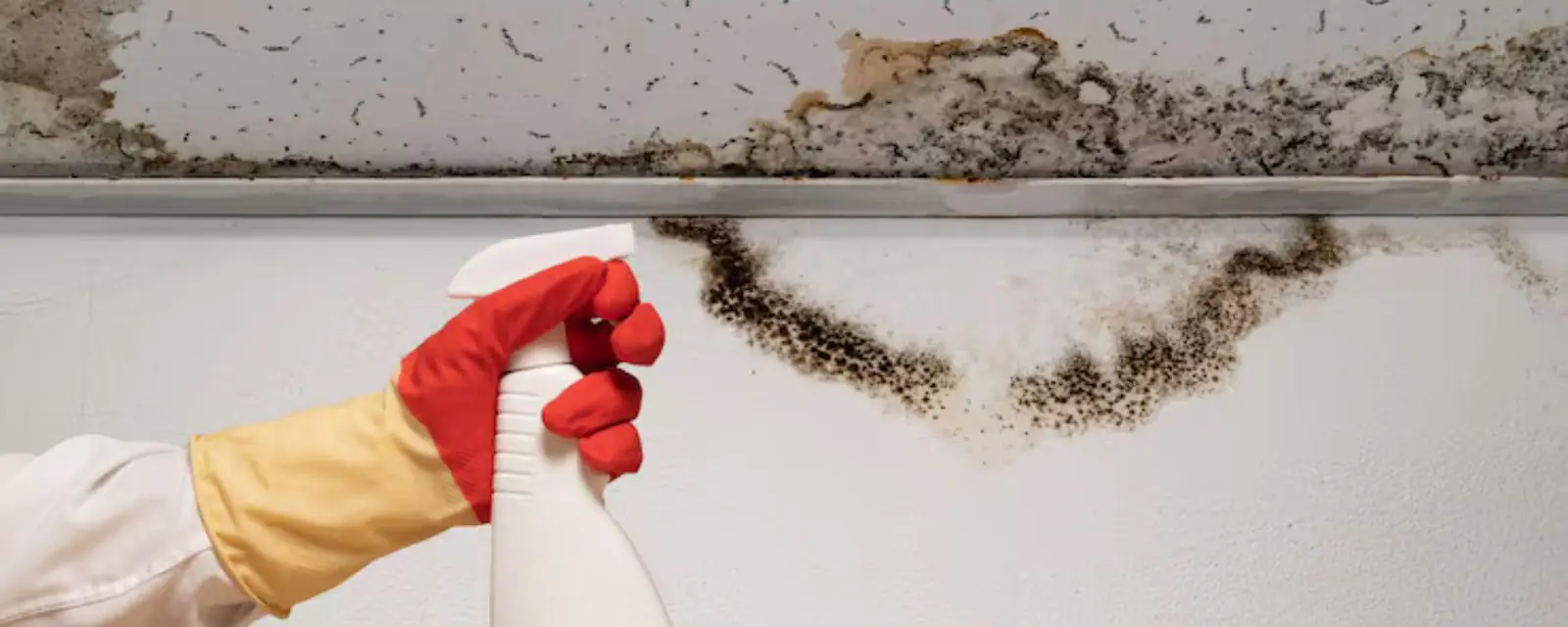
Why bathroom ceilings grow dark spots
Black mold on a bathroom ceiling in Holliston, MA is a moisture problem first and a cleaning problem second. Steam from showers rises, condenses on the cool ceiling and soaks the paint and drywall surface. Add weak ventilation and the dark spots appear within weeks.
Not every dark spot is mold. Soot, dirt, mildew and old stains all look similar from a distance. A moisture reading and a close look separate a surface film from growth that has taken hold in the board.
If the ceiling is also bowed or dripping, the cause is a leak and not condensation. See our water damage repair guide for that situation.
What it is and what it is not
Mold is a fungus that grows where moisture and a food source meet. Drywall paper, paint and dust all serve as food. The color is not a reliable guide, because black, green and white growth can look alike.
Calling a spot toxic or dangerous from its color alone is not accurate. Questions about health effects belong with a physician. The state homeowner guide notes that no federal or state limit defines a safe level of mold.
What matters in practice is the size of the area, how deep it goes and whether the moisture is still there. Those three facts decide the next step.
Ventilation: the real cause in most bathrooms
A bathroom fan has to move the steam out of the house. If it vents into the attic instead of outdoors, the moisture simply moves upstairs. A fan that is noisy, weak or clogged with dust is not doing its job.
Run the fan during every shower and for at least twenty minutes afterward. Many people leave it on a timer for this reason. Keep the door open to let humid air spread out and dry.
- Hold a tissue to the fan grille and see if it holds
- Check the attic to see whether the duct reaches an exterior vent
- Clean the fan cover and blades a few times a year
- Wipe down wet walls and the ceiling edge after showers
- Replace a loud, weak or old fan rather than running it longer
A new fan or a corrected duct is an electrical and building question. Ask the Holliston Building Department whether a permit applies before work starts.
Why the fan and the ceiling paint matter
Paint type changes how fast mold shows. Flat paint holds moisture more than semi-gloss, so bathroom ceilings painted flat darken sooner. A bathroom paint with a mildew-resistant additive buys time but does not replace ventilation.
Condensation also forms when the ceiling is colder than the room air. Poor attic insulation above a bathroom can make the surface cold enough to collect droplets. If one corner stays dark while the rest is clear, check that spot from the attic.
Fixing a cold spot is insulation work, and it may call for a contractor. Restoration cleans up the result and dries what got wet, but it does not redesign the ventilation.
A careful DIY cleaning routine
For a small patch on a painted, firm surface, a careful routine is usually enough. Open a window, turn the fan on and wear gloves, eye protection and an N95 respirator. Mix detergent in warm water and wipe in one direction, rinsing the cloth often.
- Protect the floor and tub with plastic sheeting
- Wipe the patch with detergent and water, working small sections
- Rinse with clean water and dry the surface with a fan
- Bag used cloths and wash your hands and clothes
- Watch the spot for a week and repaint with a mold-resistant primer only when it is fully dry
Do not mix bleach with other cleaners, and do not dry-brush or sand the ceiling. That puts spores into the air and spreads the problem.
When to stop and call for help
Stop cleaning if the stain returns within days, if the drywall is soft or if the patch is larger than a few square feet. Stop if the dark area is on a ceiling that also shows a stain from above, because that points to a leak.
A ceiling that stays soft after drying needs to come down. Our mold remediation page explains containment, HEPA air scrubbers and negative air machines, which are used when growth is larger or inside the cavity.
People with breathing concerns or compromised immune systems should ask a physician before doing any cleanup themselves.
Repainting and watching the spot afterward
Once the ceiling reads dry and the surface is clean, prime with a stain-blocking primer made for mold-prone rooms and apply two coats of bathroom paint. Let it cure before the next steamy shower. Keep the fan running after every use.
Check the ceiling each month for a few months. A returning spot means moisture is still reaching it, and the cause needs more investigation. A spot that returns in the same place is a clue to follow.
Keep a simple log with dates and photos. It helps a contractor see the pattern and gives your insurer a clear timeline if a claim is ever needed.
Drying the cavity before repainting
Painting over mold hides it and does not remove it. If the drywall is damp or the insulation above is wet, the moisture needs to be dried first. Crews take readings, open the ceiling if needed and run air movers and dehumidifiers.
That stage is water mitigation, and it ends when the board and framing read dry. Only then does repainting make sense.
No one can promise that mold will never return. The honest goal is to correct the moisture source so conditions no longer favor growth.
Checklist, insurance and nearby towns
Photograph the area before cleaning and keep a note of when it started. Insurers often treat gradual mold from poor ventilation as maintenance, while mold from a sudden leak may be treated differently. Check your policy and ask your insurer.
Homes in Medway and Sherborn see the same bathroom ceiling patterns, and the cleaning limits are the same.
Scope and price are explained before work starts, and our crews are licensed and insured. If you are unsure whether a patch is small enough to handle, a call to the dispatch line at (508) 446-9244 helps sort it out.
Frequently asked questions
Is black mold on my bathroom ceiling dangerous?
Color alone does not tell you. Questions about health belong with a physician. No official threshold defines a safe level, so size and cause drive the decision.
Can I use bleach on bathroom ceiling mold?
Light surface growth usually comes off with detergent and water. Never mix bleach with other cleaners, and ventilate well.
Why does mold keep coming back?
The moisture is still there. Weak fan venting, a leak above or damp insulation keeps conditions right for growth.
Do I need a licensed mold remediator in Massachusetts?
The state guide says no licenses are required to conduct mold remediation, so ask for a Statement of Qualifications and references.
Should I test the mold?
Testing rarely changes the cleanup steps for a visible patch. A written scope, moisture readings and a plan to fix the cause matter more.
What does the Massachusetts guide recommend for light mold on a Holliston bathroom ceiling?
A thin surface film can usually be washed with detergent and water, per the state guide, and mold remediation does not require a license in Massachusetts, so ask for qualifications and references.
Dealing with this right now?
Call the 24/7 line. Scope and price are explained before work starts.
☎ Call (508) 446-9244